By Michael Roddy
One of the hardest tricks to pull off in moviemaking is a fictionalised film based on the career of someone whose music and discs everybody knows and loves, and whose performance by actors who are not musicians is at best hit or miss.
“Everybody Digs Bill Evans” neatly avoids that bear trap by picking a period in the life of the late, great jazz pianist when he effectively retired from the club scene because of the death of his bass player, Scott LaFaro, in a late-night car crash after a gig in 1961.
The Evans trio that fateful night had just recorded what became his famous LP “Sunday at the Village Vanguard”, which consistently over the decades since its release has been named one of the greatest jazz recordings of all times.
The ingredients sound like a recipe for grim, without the leavening content of super music to lighten the load, but no need to fear. The Irish-backed “Everybody Digs Bill Evans”, which had its world premiere on Friday at the Berlinale, is an absolute gem and a great addition to the pantheon of music films.
Director Grant Gee previously has made music documentaries, most notably on Radiohead and Joy Division. He said he was drawn to take on a fictionalised film on Evans after seeing a photograph of him.
“There was a very odd photograph of Bill that made me –and I knew nothing about him — and I thought, who is that? And what does that man sound like?,” Gee said. “So the first record I got to listen to was ‘Sunday at the Village Vanguard’. And I can really remember playing the first track. That was the moment. And it was just the juxtaposition of the way Bill looked, and the way Bill makes that sound, was extremely powerful.”
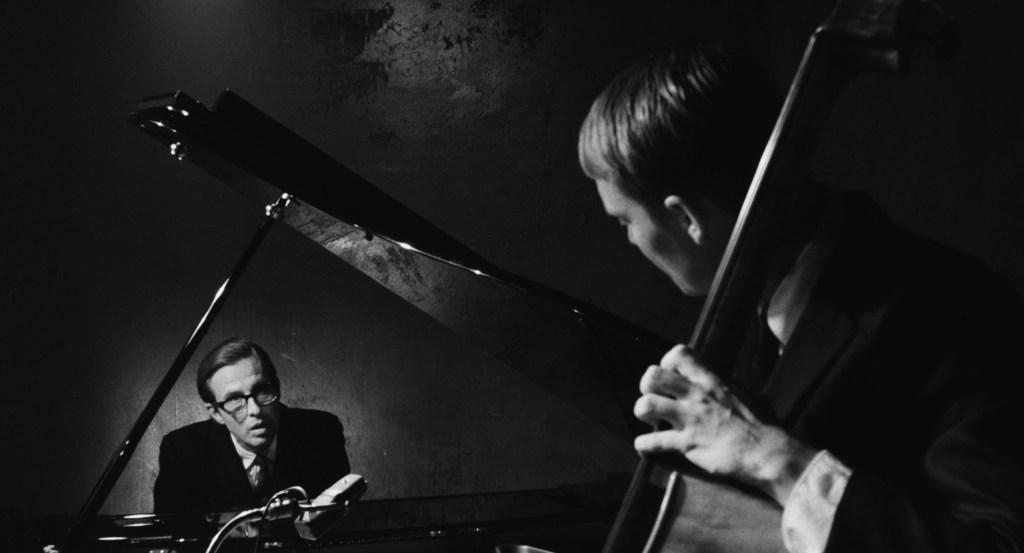
Anders Danielsen Lie, the Norwegian star of the JoachimTrier Oslo trilogy that included “The Worst Person in the World”, is cast as the sometimes affable, often inscrutable, eternally scrawny Evans. Wearing geeky glasses and a button-down shirt, Evans always looked less the jazz musician than an accountant or clerk — and Lie captures that look precisely.
Bill Pullman, the American actor who helped save the world from aliens decades ago in “Independence Day”, is on hand as Evans’s sometimes hard-drinking father Harry and Laurie Metcalf plays the warm and understanding mother who made sure he got piano lessons. Valerie Kane plays Ellaine Schultz, the girlfriend with whom Evans shared a debilitating heroin addiction while Barry Ward plays Evans’s older brother Harry Jr.
There is an undercurrent running through the film that both Harrys — father and son — are not only in awe of Bill’s career, but also envious. Harry Jr. insists after the crash that Bill come to live with him, his wife and his young daughter — whose name inspired the title of Evans’s album “Waltz for Debby” — but he quickly sours on having his brother around, not only because Bill goes out late at night to score heroin but also because he realises in Bill’s presence what a lesser light he is.
So Bill is shipped off to Florida where his parents have retired to a bungalow in a retirement community, and where Evans goes through a cold turkey heroin withdrawal. His father likes to point out how posh some of the nearby houses are but he, like his elder son, feels that in his striving to earn his nest egg, his life was too “narrow”.
He even thinks he missed out on a better life because his heritage was Welsh and not Irish.
“Look at Kennedy. The Irish are taking over. But never any Welsh. It’s because we’ve never suffered. It is our punishment,” he tells Bill on one of their jaunts.
The film gets a huge boost from the clever and inventive photography of Irish cameraman Piers McGrail. In opening shots, set in the smoky confines of the famous New York City jazz club, McGrail, shooting almost entirely in black and white, captures the atmosphere so well you can almost taste the bourbon. After the gig ends, and LaFaro is driving home and swerving across the center lines of the road before leaving it entirely, the white stripes on the asphalt are overlaid with the silvery strings of LaFaro’s string double bass.
The film bursts into lurid, fiery colour three times — to mark moments of death connected to Evans, in 1973, 1979 and 1980 — the last showing Evans starting to spit up blood in the back of a car and being driven to a hospital where he died.
It’s a masterful job of portraying a huge musical talent embedded in a deeply flawed human being. As a competitor for the festival’s top Golden Bear prize, to be awarded next week, it is one of the standouts so far..
 Irish Arts News