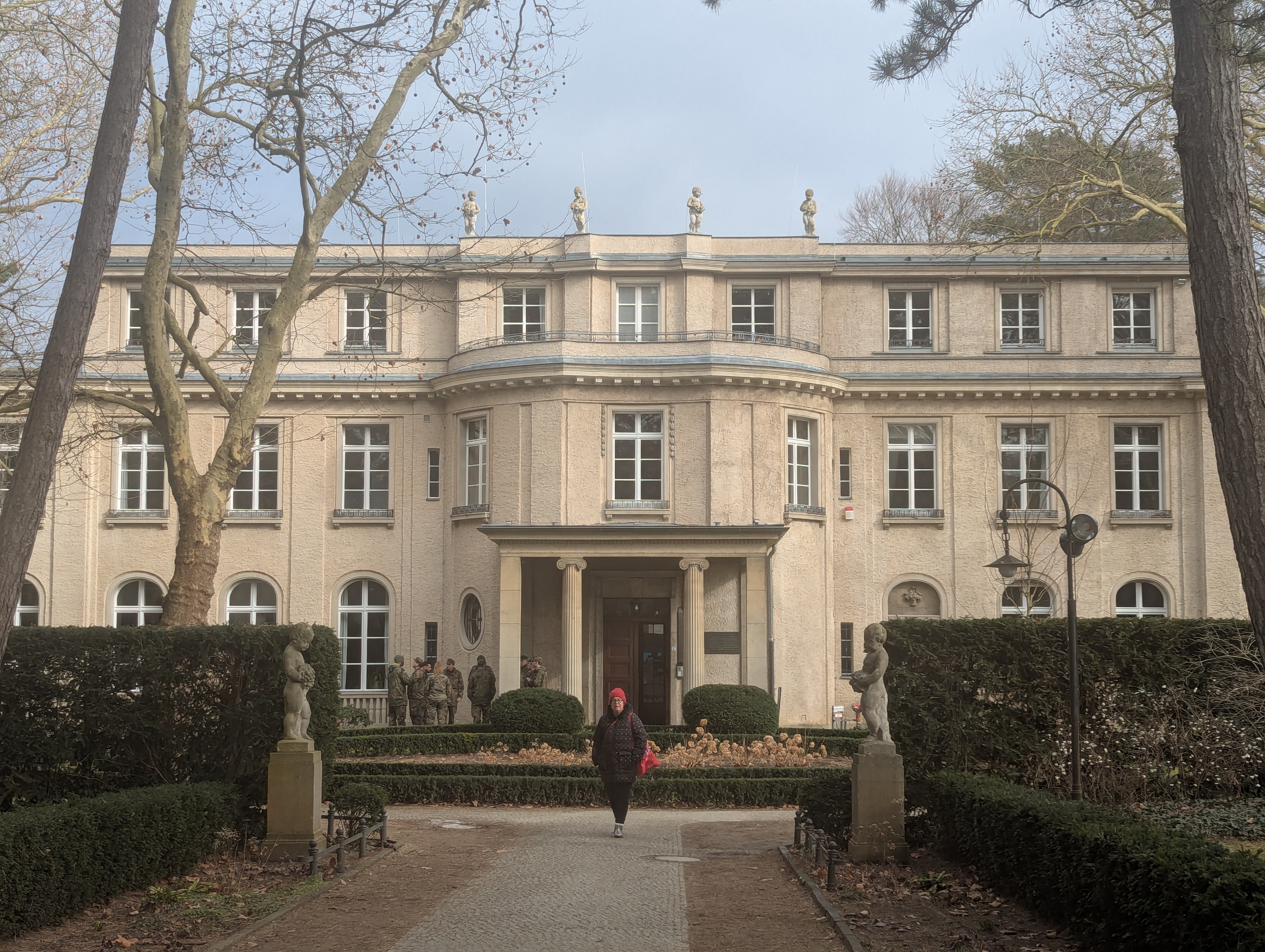
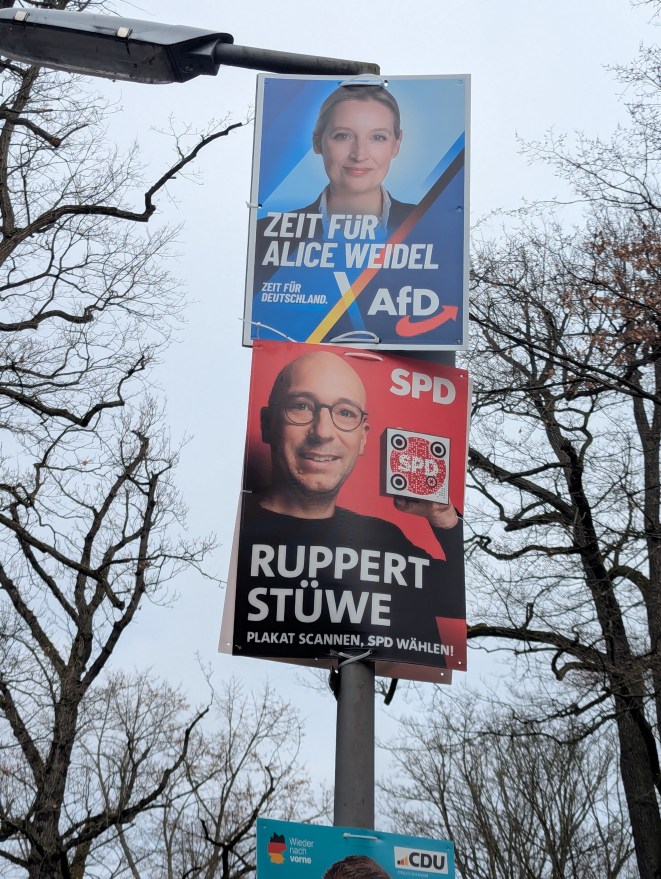
The election poster for Alice Weidel, the leader of Germany’s far-right Alternativ für Deutschland party, seemed out of place at a bus stop a hundred metres (yards) from the House of the Wannsee Conference museum, the lakeside mansion where the Nazis plotted the extermination of the Jews.
The museum is an integral part of Germany’s efforts, for most of the past 80 years since the end of World War Two, to ensure that people remember what happened — a so-called “erinnerungskultur”.
It is where Nazi leaders met on January 20, 1942 and produced a 15-page protocol, of which only one copy survives, detailing how and why the Jews must be eliminated from Europe.
The AfD, with a big assist from billionaire Elon Musk, U.S. President Donald Trump’s effective number two, would like to tone down that culture. One prominent AfD member said the Nazi era was a speck of “bird shit” on Germany’s history. Musk has said it’s time to move on.
People both pro and con the AfD, and what it stands for, waited with bated breath for the results of Germany’s countrywide election on Sunday which will lead to the selection of a new chancellor. They wanted to see if the AfD could bulldoze its way into power, as the Nazis did in elections in the late 1930s, or if the centre would hold.
As it turned out, preliminary results showed the AfD doubling its percentage of the vote from 2021 to 20 percent, which is what pre-election polling showed it would get, but it was not enough to allow it to force its way into a new government.
“They will have to go think over their positions,” said Dieter Korn, 70, a retired IT professional who was among a mostly relieved group of election-night diners jammed into the popular Spree riverfront restaurant Ständige Vertretung in Berlin.
“It’s not so bad, you have more possibilities to make a coalition,” fellow diner Egon Schuler, 77, who used to own a photographic equipment factory, said of the fact that some smaller parties improved their showing.
As for the result for the AfD, Schuler said: “They did well, but not so well, but we don’t care. Most of the people don’t like the AfD…30 percent are choosing AfD but 70 percent are not choosing AfD and this is a majority. We don’t want to work with these kind of people because behind it there are fascist people.”
That was the feeling at a conference in a modern lecture hall on the grounds of the Wannsee museum where octogenarian Jewish Ukrainian refugee and retired teacher Svitlana Petrowskaja told a rapt audience about how she managed to live through World War Two, where her family was torn apart both by Nazis and Russians, only to find herself a refugee again, as she approaches the age of 90, because of Russian President Vladimir Putin’s three-year-long war on Ukraine.
Petrowskaja said she took refuge in Berlin after the bombing in Kiev became too much for her. She said she knew from experience that if the Russians were to defeat Ukraine, the first thing they would do would be to “Russify” the culture, forcing Ukrainians to speak Russian and to read Russian books. She said she has no time for people, like Donald Trump, who seem not to know what a Russian victory would mean for Ukraine.
“I don’t know, maybe he is mad, or maybe he is a huge dictator and foolish person,” she said after her talk. “He is a businessman, for him it’s only money, money, money, money from everybody…
“From my point of view, he doesn’t know history, he doesn’t know what Ukraine is and where it is….It seems to me Americans didn’t understand what they did during the election.”
The exhibitions in the Wannsee mansion make it crystal clear, in three languages, German, English and Hebrew, what decisions made there meant for the Jews. The protocol never mentions extermination or poison gas, but says too few have died since the beginning of the war and the pace must pick up. Any Jews who unexpectedly survive slave-labour camps will have to be dealt with specially, lest they “become the germ cell of renewed Jewish revival”, the protocol says.
Alex, visiting the museum from Dresden, one of the German cities where the AfD got its start, said he doesn’t agree with its positions but understood its appeal.
“The AfD is strong in Dresden and young people don’t know this history,” he said, referring to the decisions made at Wannsee.
“They listen to the AfD’s messages about jobs. And right extremism is on the rise, everywhere.”
— By Michael Roddy
 Irish Arts News