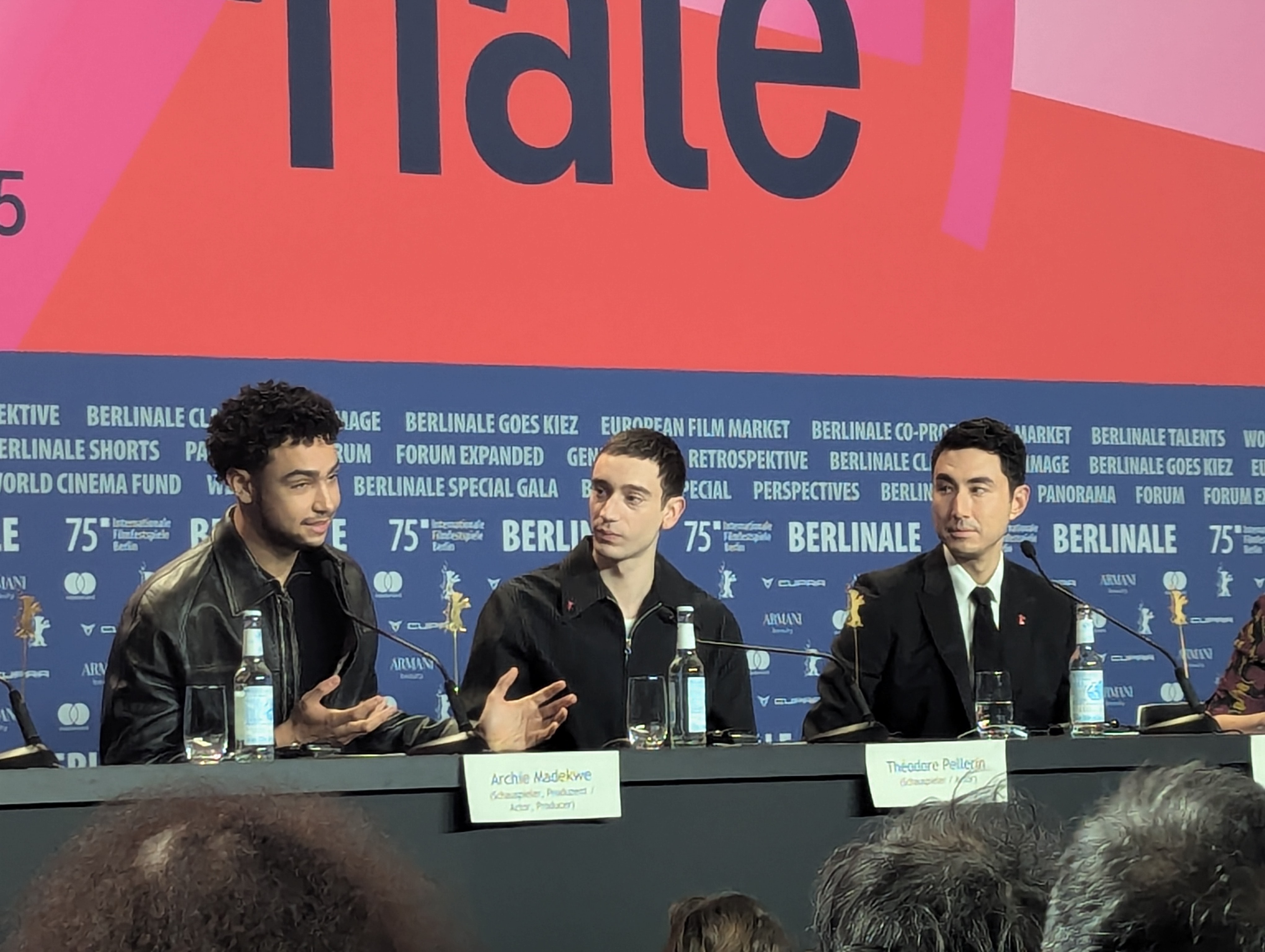

The celebrity-worship culture of the Los Angeles rock scene runs up against the desperation of an insinuating outsider who will do anything to gain admission to a star’s inner circle in “Lurker”, a dark but sometimes comic Sundance hit that had its international premiere at the Berlinale film festival on Friday.
With a nod to “The Talented Mr. Ripley” and its infamous depiction of a nobody assuming the identity of a rich young man he has murdered, actor-director Alex Russell’s first feature film is lifted by a standout performance by Canadian actor Théodore Pellerin. He plays Matthew, a young geek who lives with his grandmother and works at a marginal job in an LA clothing store. When up-and-coming biracial rock singer Oliver (Archie Madekwe), whose career is on the cusp of going ballistic, comes into the store for something cool to wear, Matthew instantly recognises him. He calls up a track he knows Oliver loves from his social-media feed and plays it over the store’s sound system.
This leads to Matthew being invited to Oliver’s concert that night and to come backstage to meet the singer’s “homeys”. They put Matthew through a hazing ritual that he passes with flying colours — by dropping his pants. One thing leads to another and soon Matthew is working as the court photographer,. He films Oliver when he crashes his trail bike into a rubbish bin. After he posts it online and it goes viral, Oliver anoints Matthew as his “best friend” and makes him a more or less permanent resident of the posh house in the Hollywood Hills that serves as Oliver’s crash pad.
Best friends like Matthew, though, are best not crossed. Matthew is left stranded in London after a gig because Oliver felt bad vibes from him during an album-cover photo shoot. Humiliated and having to call his grandmother to send him money for the flight home, Matthew plots a way to get back into Oliver’s inner circle — even if the singer doesn’t want anything more to do with him. And therein lies the Ripleyesque twist.
“There is nothing, for some people and especially in American culture, that is above celebrity culture,” Pelerin told a news conference. “And so I think that to have the access, the opportunity to enter his (Oliver’s) circle, that world that is just so above him, is something that he never thought would be open to him. And so to enter that, there is then no possibility of losing that one chance of accessing that.”
Although his casting out from Oliver’s inner circle forces him to go back to work at the clothing store, a visit to the store by two young teenage girls who recognise Matthew from his work on Oliver’s videos, and are going to the singer’s concert that night, inspires him to set up a honey trap. Into which Oliver duly stumbles.
That’s almost giving away too much, but the film needs to be seen for how the dynamics between Oliver and Matthew develop. The song “I’m Your Puppet”, a 1966 hit for James and Bobby Purify, is played twice, once at the beginning and again at the end. In between, puppeteer and puppet have switched places in a deliciously dark bit of plotting which director Russell said is not based on a specific event but represents an amalgam of things that happen in La La Land.
“Ripley was an inspiration on it,” Russell said. “As to my own sort of personal experiences inspiring the film, I think it’s like a healthy abstraction. From what I’ve seen in my experience, I think I’ve seen these kinds of dynamics at play, maybe not to the extremes that play out in the film.
“But…it was very important to me that nothing in the film, nothing that happens in the film, is out of the realm of a possibility.”
— By Michael Roddy
 Irish Arts News