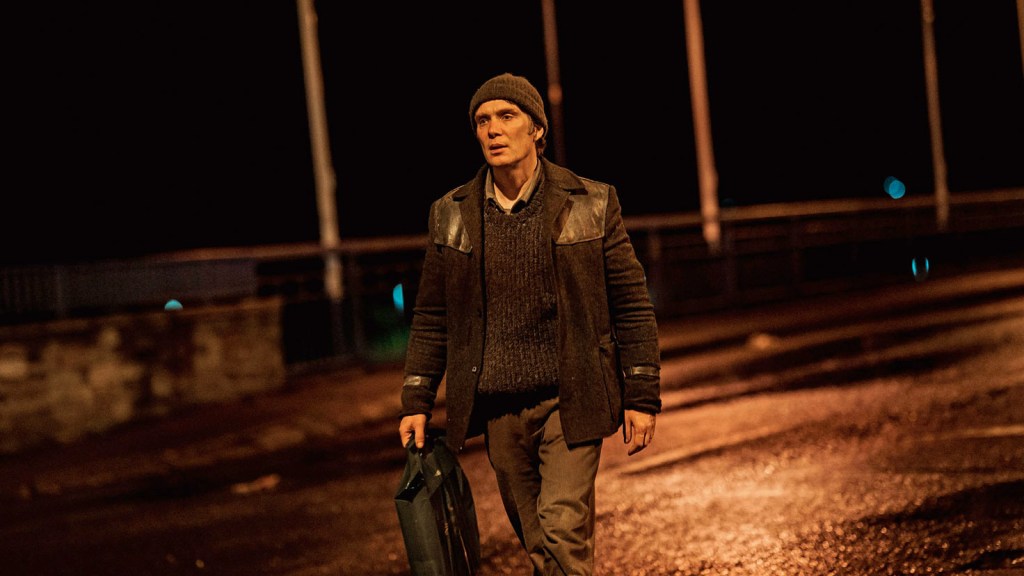
In his last big screen role, Irish actor Cillian Murphy, played the nuclear physicist Robert Oppenheimer who ran the Manhattan Project that built the first atomic bombs to defeat the Axis powers in World War II. In his latest screen incarnation, he is the coal merchant Bill Furlong, delivering fuel to penny-pinching households during the bleak economic times in Ireland in the mid-1980s, who has a run-in with another formidable power — Roman Catholic nuns.
Murphy, 47, stars in the screen adaptation of Irish writer Claire Keegan’s novella “Small Things Like These”, which opened the 74th Berlinale film festival on Thursday out of competition for the festival’s main Golden Bear gong. Murphy is hotly tipped to win the best actor Oscar for Oppenheimer. But the role in which his performance tugs at the heartstrings is this one, which in a terse 96 minutes, directed by Belgian helmer Tim Mielants, evokes a church-ridden, close-minded and. of course, rain-swept Ireland that may be too much to bear for those who lived through it.
Christmas is coming in 1985 in the southeastern Irish town of New Ross and Furlong and his wife Eileen (Eileen Walsh) will be celebrating it with a Christmas cake and festive meal with their five daughters. Across town, though, there is a convent. And in it are housed young women who made the hideous mistake, in then strictly Roman Catholic Ireland, of getting pregnant out of wedlock. These young women, disowned and shunned by their families, worked long hours at what were called the Magdalene laundries, church-run sweat shops where “fallen women” would learn the value of hard work, and be taught the lesson never to stray again. Their babies were often given up for adoption, sometimes sold to Americans.
Some 30,000 Irish women were interned in the laundries between the 18th and 20th centuries. The last of them closed in 1996. It’s a grim history that has haunted Irish society for the last two or three decades. How could we have allowed this to happen, is the question Irish people ask themselves.
Furlong’s wife Eileen gives the answer early on in the film: “If you want to get on in this life there are some things you’ve got to ignore,” she tells Bill, sensing that something is troubling him.
What sparked his troubles is that he has seen a young woman, about the age of his eldest daughter, being dragged out of her parents’ car and forced inside the convent. It happens while he is making a coal delivery to the Sisters. Everyone in town knows Bill, and the Sisters know everything that goes on in the town.
He cannot shake himself free of the ugly scene he has witnessed. Amid the Christmas revelry on the main street, he sees young lads taunting the girls. He worries about what his own daughters will encounter as they make their way in the world. Bill is also the offspring of an unwed mother, who died suddenly when he was still a boy. He has always wondered who his father was. He also realises that had it not been for the kind heartedness of the Protestant woman his mother worked for, who took him in after his mother died, he could have suffered a fate similar to the offspring of the Magdalene laundry inmates.
His interactions with the convent do not take a Christmas break. The Mother Superior, Sister Carmel, played with great relish by Claire Dunne, insists that Bill must bring a load of peat briquettes before the holiday — or she’ll contact a rival merchant. Bill shows up so early that none of the sisters are about when he opens the coal shed and finds a young woman locked inside, filthy and freezing. He proffers her a hand, coaxing her to get up, and leads her to the convent. There has to have been a mistake, Sister Carmel says, ordering the other nuns to clean up the young woman and give her a big breakfast. The other girls must have locked her in the shed while playing hide and seek. Sister Carmel, fully aware of her power and standing in the town, effectively commands Bill, against his wishes, to stay to tea with her.
On the passageway to Sister Carmel’s wood-paneled sitting room, Bill passes the kitchen where young women are working as kitchen slaves. He also gets a glimpse of the laundry, where the women are hurrying about putting clothes into huge industrial washers amid clouds of steam and the ugly, throbbing sound of machinery. The scene reminded me of nothing so much as those moments in the Hungarian movie “Son of Saul” where the workings of the ovens at Auschwitz were shown. As if to emphasise that relationship, when Bill finally does manage to break free of the Mother Superior, after she has given him an envelope stuffed with cash for his wife — hush money if ever it were — he drives past a stretch of road lined with barbed wire. Director Mielants and screenplay writer Enda Walsh have loaded the film with other choice nuggets. Listen for the church bells at the beginning and end, keep an eye out for crows and geese and reflect on why Ravel’s “Pavanne pour une infante defunte” (Pavanne for a dead child — in some translations) is played not once but twice.
Spoilers can be annoying but Murphy’s superb, under-stated performance as a man having a midlife crisis over who he is, what his role in life is and what will happen to his daughters and family give strong indications of where the story line will lead. At a festival press conference, Murphy said he really didn’t know what would become of the man he plays, after the film’s gripping conclusion. But the stories, tales and memories of what went on in Ireland during the time in which the story is set suggest it did not go well for Bill Furlong and his family. Audiences, though, should find plenty here to ponder, some great acting to savour, and perhaps a moment to ask themselves how could this have happened at all, at all?
By Michael Roddy
 Irish Arts News